GRADUATE SHOW AT RUA RED
INSTALLATION DESCRIPTION:
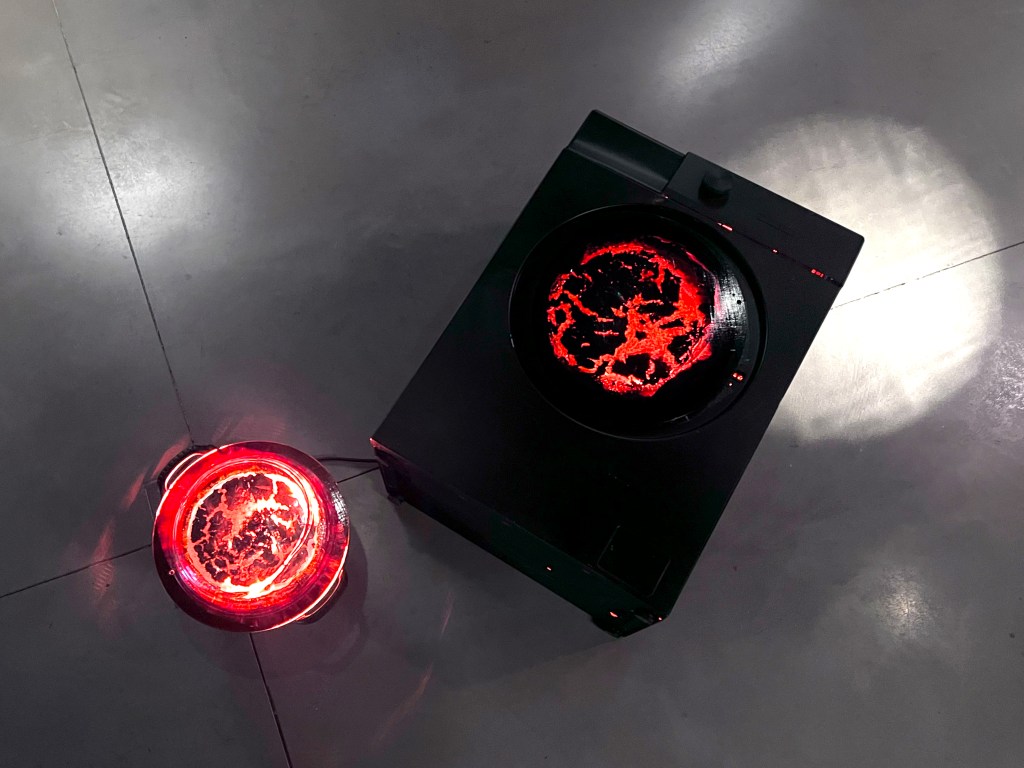
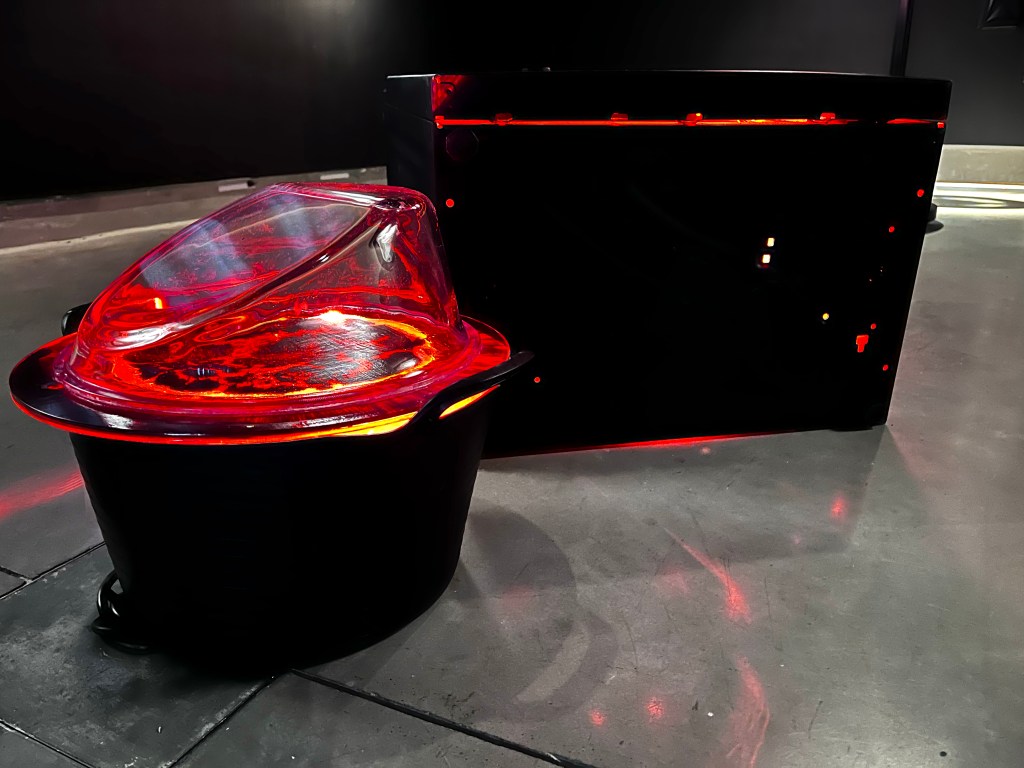
Entering the dimmed installation space, the senses recalibrate. A soft drone hums, the scent of freshly laundered linen clings to the air. You’re inside something, a machine? A spacecraft? Or perhaps a portal into the existential absurd — where the mundane becomes astronomical, and the gentle repetition of chores is reconfigured as a confrontation with time, meaning, and mortality.
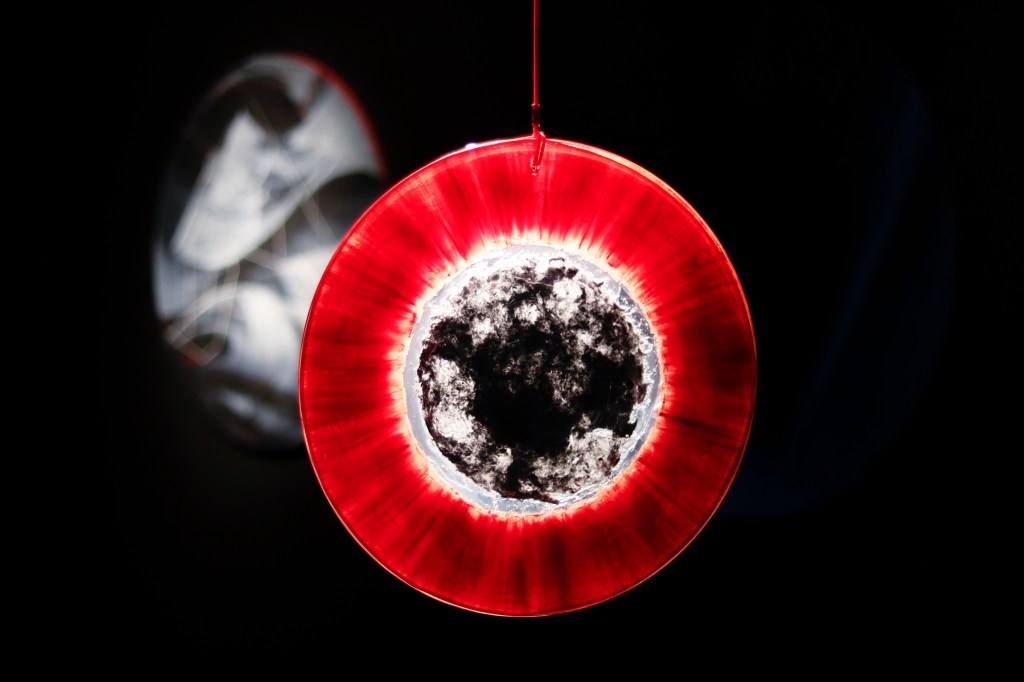
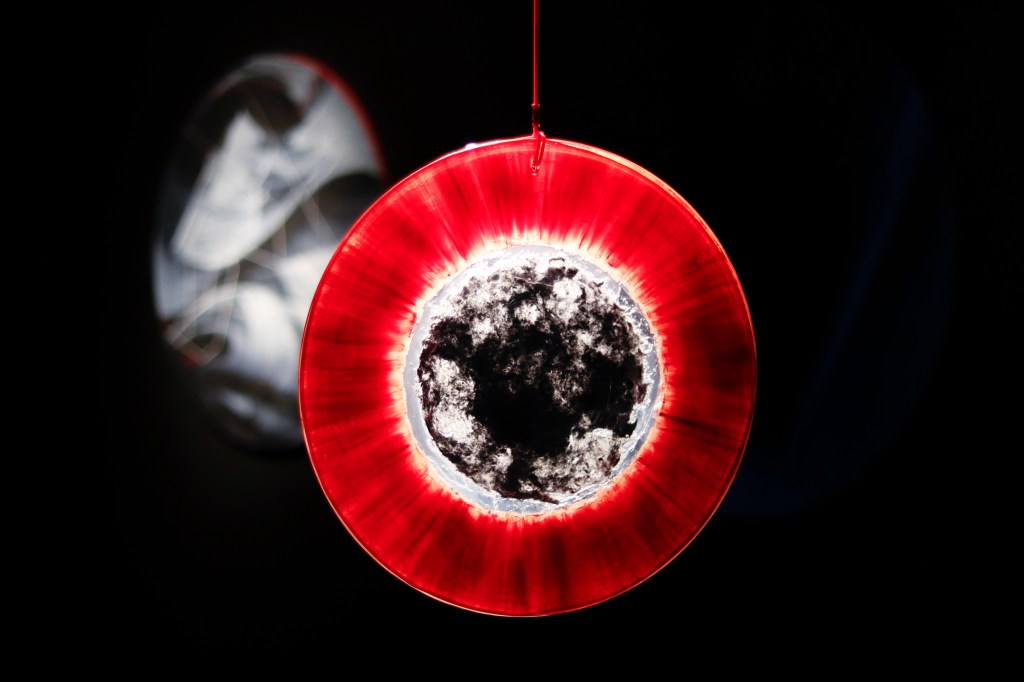
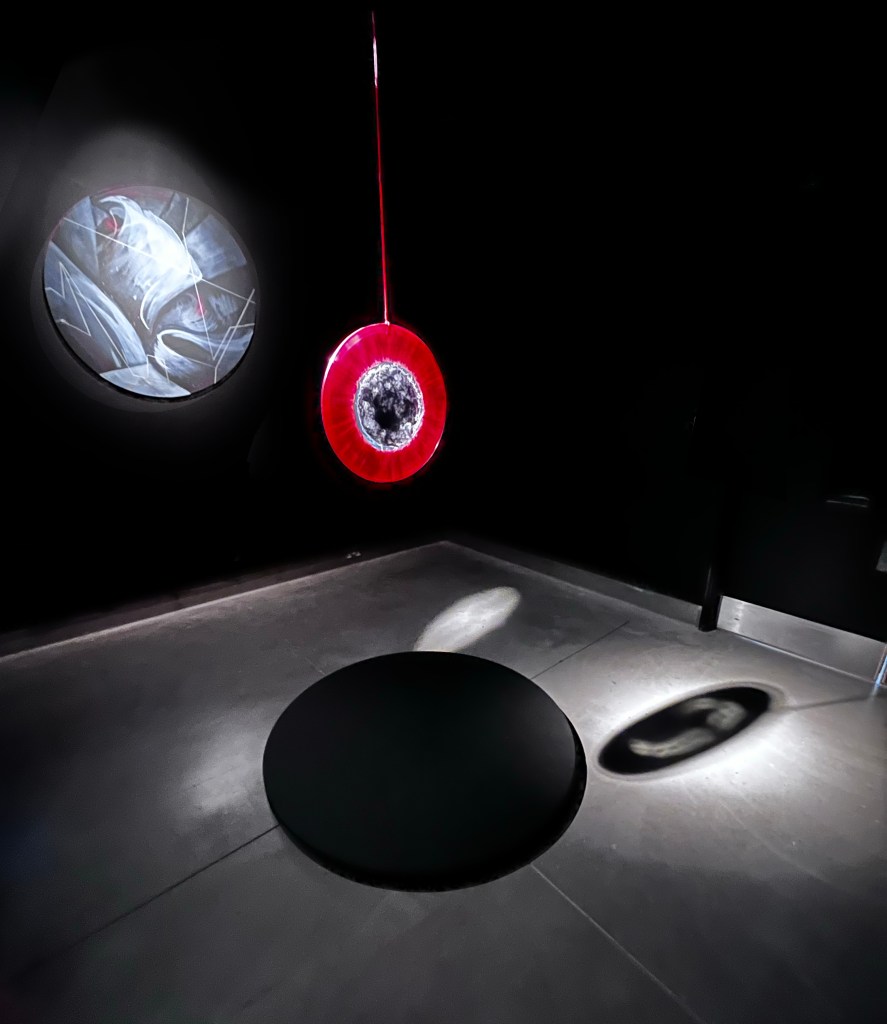
The atmosphere is hushed, reverent. The viewer slows down, as though time has altered its rhythm. It has. At the centre of the space spins a scarlet-red disk: stained glass strung on red washing line, capturing lint from the artist’s own washer/dryer. It casts a solar system of shadows and reflections that orbit the circular floor plinth like a black hole. An emptied washing machine shell — repurposed as speaker — pulses with light and vibrates with a composition derived from the adjacent video work like a distant signal from deep space.
On the left wall, is a circular projection between two oil and chalk paintings. The image is a mist, a gaseous swirl, a domestic weather system slowed to the point of meditation. Motion capture data, filtered through TouchDesigner, leaks tracelines beyond the projection’s edge, activating the paintings like charged satellites.
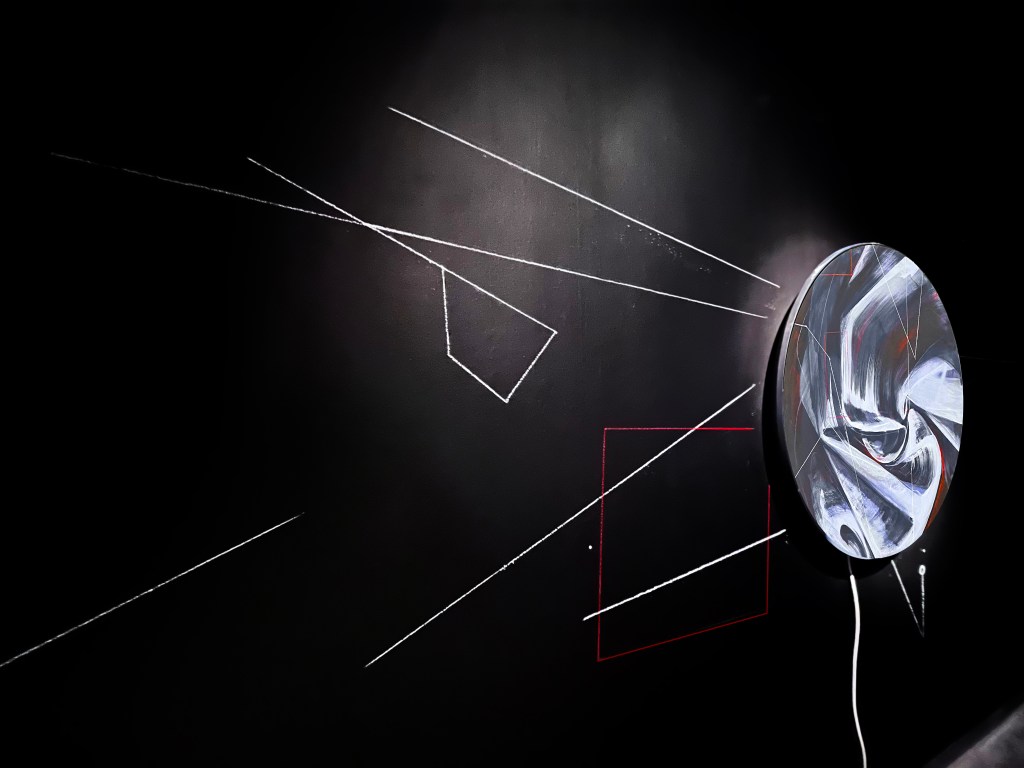
Opposite, another painting rotates in soft rhythm with a wall-drawn chalk diagram, a map, perhaps, of some forgotten orbit, blueprints or broadcast signals. The secret? They trace the artist loading her washing machine, a gesture of cosmic gravity, a choreography of domestic ritual with astronomical precision. Cycle, Spin, End.


Cycle, spin, end.
Laundry, ‘the Washing’ – as an act of cleansing and renewal, stretches across human history. It predates organised religion and echoes the cosmic cycles of birth, life, decay, and rebirth. This body of work – an installation of expanded paintings and drawings, evocative of clocks and pendulums, star maps, instructional diagrams, and motion-mapping data – is rooted in the daily ritual of laundry, but connected to the expanse and continuum of space. Here doing the washing is subverted to a sacred, ritualistic act, a meditation on the infinite, transforming this mundane labour into an eternal gesture. By embracing the absurd, it attempts to create order, giving significance to the seemingly insignificant, and resists the belief that we exist in a purposeless, chaotic universe.
In his essays ‘Quasi-Infinities and the Waning of Space’, and ‘The Domain of the Great Bear’, Robert Smithson explores concerns with space, temporality, perception, and decay. They express Smithson’s fascination with the instability of space and his critique of human attempts to impose order on it. He proposes that we embrace the impermanence and unknowability of life.
Crowley’ series of circular monochromatic paintings for her MFA Fine Art Show in Rua Red, become a metaphor for the way time itself progresses, erodes and renews. An effort to embrace flux, the artworks evoke the tension between ephemerality and permanence.

Image 3: ‘END’. Oil and Chalk on Canvas, 90cm diameter, 2025
Chalk wall-drawings of motion-capture data points representing the gesture of loading a washing machine, in content and medium, they speak of transience, while oil paintings reference the human obsession with legacy. Awareness of the transience of things heightens the appreciation of their beauty, and evokes a sadness at their passing. Humour is at play, while, in an effort to gain agency over the acceleration of days, insignificant chores immortalised in oil paint and stained glass, become enigmatic ephemeral moments to be noticed and appreciated.
MONOCHROMATIC – Graphic Print Studio 2024
An exhibition of abstract monochromatic work by 25 artists selected from members of Print Network Ireland which comprises Ireland’s largest four print studios – Graphic Studio Dublin, Black Church Print Studio, Cork Printmakers and Limerick Printmakers.
Monochromatic is co-curated by Catherine Daunt, Curator of modern and contemporary Graphic Art, British Museum & Peter Brennan, Gallery Director, Graphic Studio Gallery.

‘Cyclopean Rhythm’ 1, 2, 3, 4, 50 x 50 cm (paper size) Edition size 14 Medium Silkscreen Print with hand finished Monoprint
MÓR – Graphic Print Studio 2023GRAPHIC PRINT GALLERY

Imagine Sisyphus happy
Varied edition Silkscreen Print with hand-painted backgrounds on Fabriano paper
Diptych 190 x 80cm
In ‘The Myth of Sisyphus’, Albert Camus argues that the absurd lies in the juxtaposition between the fundamental human need to attribute meaning to life and the “unreasonable silence” of the universe in response.
‘Imagine Sisyphus happy’, explores this. We are complicit in the ambiguity of everyday routine. The sense of satisfaction in a job well done, the relief that it’s completed, whilst knowing that it must be repeated all over again. Railing against the knowledge that contentment lies, in putting aside frustration, and the acceptance of one’s fate.
E X P A N D E D Graphic Print Studio 2023
KLOTHO Installation
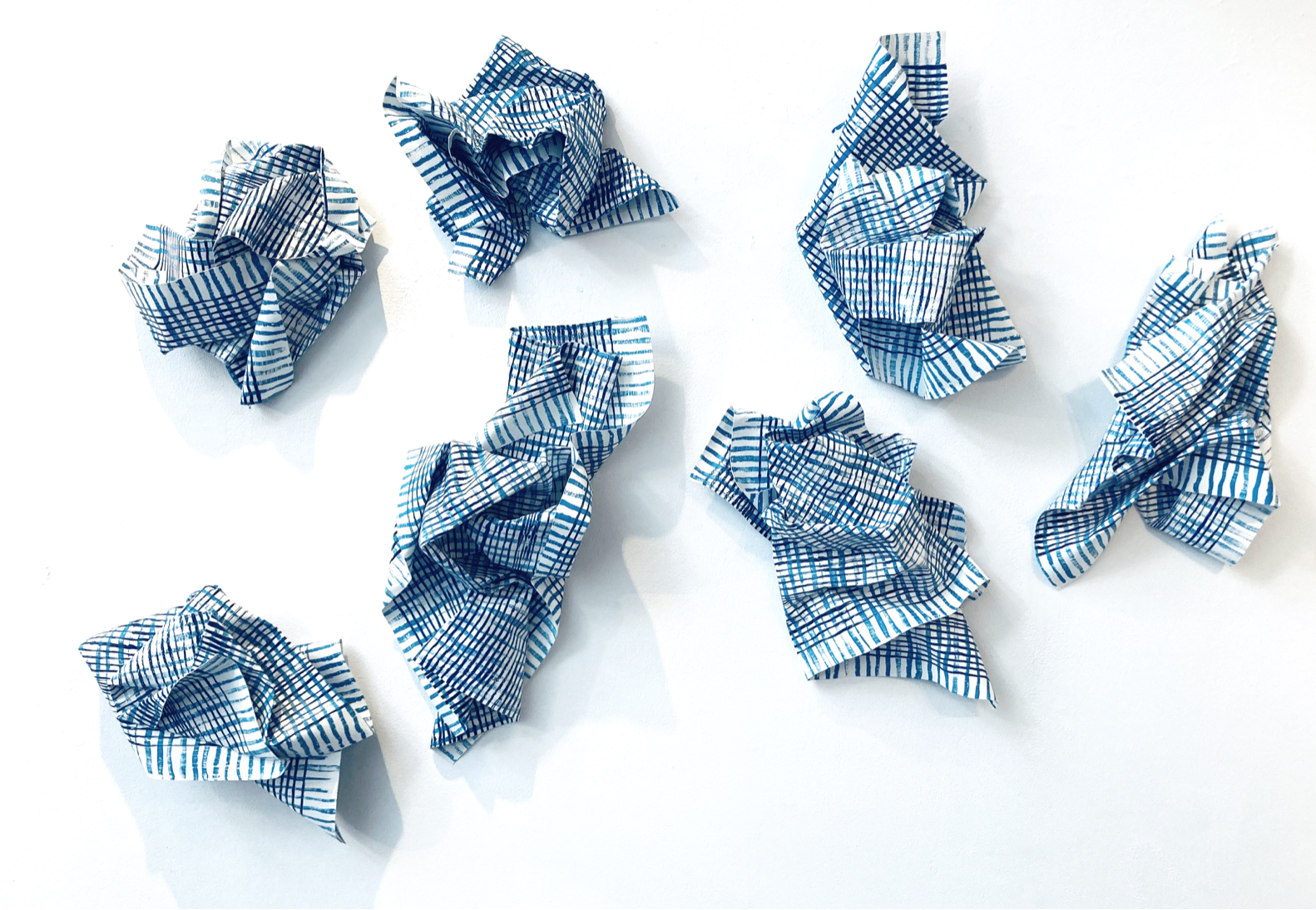
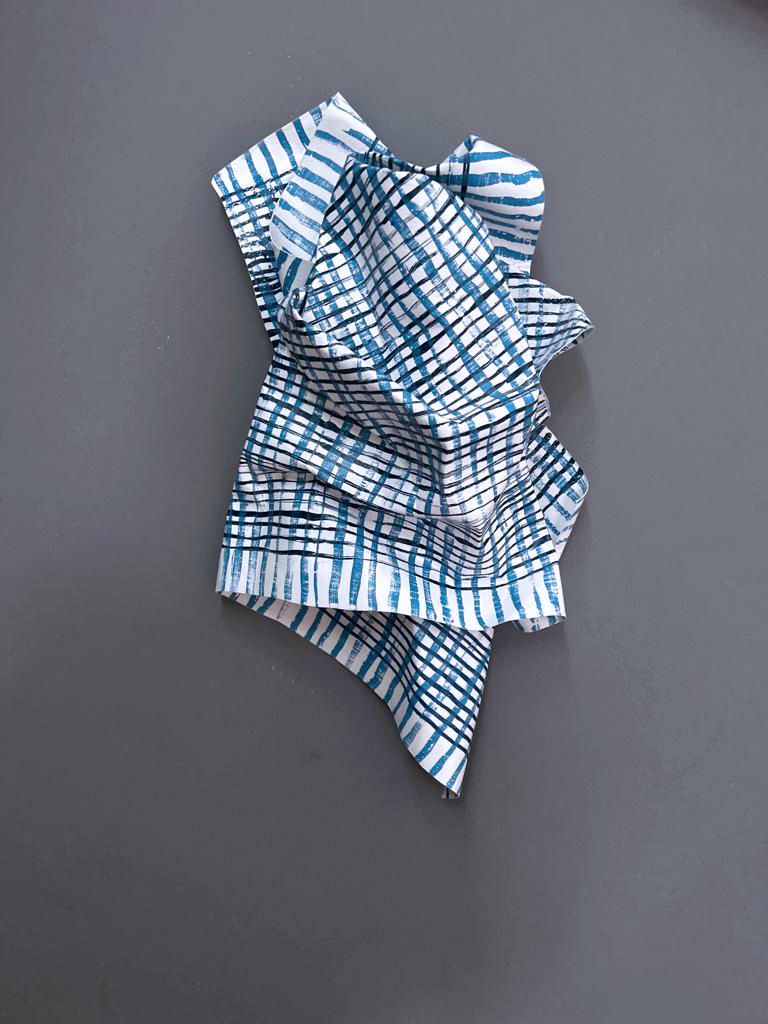
Sculpted double sided silkscreen print
Klotho is the youngest of thethree Fates whose role was to ensure that every being, lived out their destiny as it was assigned to them. But what is the difference between destiny and fate – both words deal with a predetermined or destined future. However, while fate is the acceptance of pre-determination in life, surely destiny depends on your choices and is therefore the self-determination of life.
With these works Crowley questions destiny, while the acceptance of one’s lot may in turn lead to contentment and even happiness, the installation ‘Klotho’, is a rallying cry – not to throw in the towel but to throw it down, take control and reshape the future into the way you want it to be.


SINK
A solo show by Monika Crowley
No 6. Ranelagh Arts, 17th – 24th November 2022
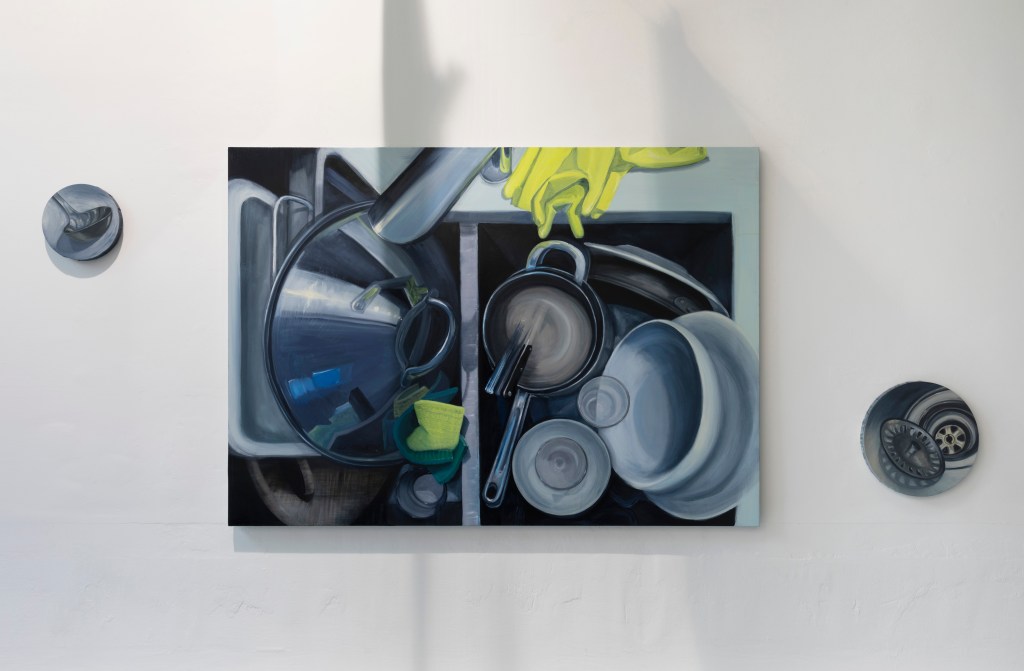
Ranelagh Arts are delighted to host SINK, an exhibition by Monika Crowley showcasing our gallery space at No 6. SINK is a conceptually and visually rich body of work employing a variety of methodologies and materials across installation, silkscreen works on paper, monotype prints on tea-towels, oil paintings on canvas and board, and video. Crowley is a member of the Graphic Print Studio and in 2022 has exhibited in group shows there, at the Crawford Gallery, Cork, and curated several exhibitions for Ranelagh Arts at No 6 as creative director of their visual arts program. This is her first solo presentation in 2022.
Crowley describes her practice as ‘exploring the trauma of change and identity crisis, utilising mundane objects in a symbolic, transformative manner’. In one sense, the objects depicted in ‘Sink’ couldn’t be more quotidian or mundane. They are the functional objects we handle on a daily basis, often while our minds are elsewhere. While ‘kitchen sink’ has attained the status of a genre within drama, we tend not to think of the objects themselves as art. Yet in Crowley’s work, these domestic objects – cups and glasses; pots and pans; cutlery and scouring pads – are placed center stage. There is a symbolism to the objects she depicts and, in representing the daily and cyclical (even Sisyphean) task of feeding, cleaning, and nurturing, she alludes to domesticity and all of its messy, joyful, fraught, intense, life-affirming, mundane, profound and necessary qualities.
In celebrating the domestic, further symbolism is at play: that of the dualism of the mother and the artist/maker. Ultimately, it’s a conflict that the artist makes look easy. In referring to it as a ‘labour of love’, it’s one which, on one level, she cherishes while also refusing to idealise. These moments are viewed through the representation of it’s aftermath – the detritus of a meal, the washing up. Under each painting, the date, memory, and moment are recorded as a diary entry, inscribed on the panels that may reveal themselves through the passage of time. Above the paintings hangs a series of monoprints on tea towel canvases. Each towel a record of a kitchen utensil that has been given the significance of a religious artifact, hung high on a washing line like prayer flags above the gallery space. There is a complexity, hidden within these so-called ‘mundane’ objects – which become less so, transformed in Crowley’s hands, these pieces are more than still-lifes, rather they are ‘life stills’.



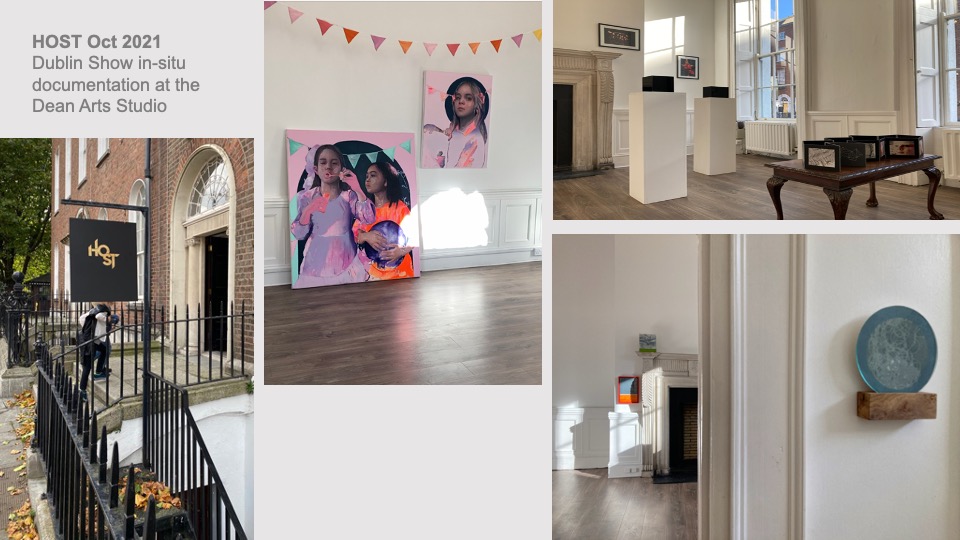
HOST 2021 Dublin & Belfast
An exhibition exchange where eight artists across two cities interrogate one theme.
Participating artists: Monika Crowley, Margot Galvin, Dan Henson, Mary O’Connor, Alana Barton, Jonathan Brennan, Tim Millen, Esther O’Kelly.
Curated by: Moran Been-noon.
Dublin: The Dean Arts Studio, October 2nd -9th 2021
Belfast: as part of the Belfast International Arts Festival October 14th -24th 2021
Starting from a single sentiment, “host”, each artist travelled a distance into their own narrative world, using the group prompt as a conceptual and methodical challenge. The work in the exhibition includes meditations on our relationships with the natural world, with places and traditions, with architecture, with each other, and with our own thoughts and emotions.
Art about the passage of time seems to emerge in periods of trauma and crisis, whether personal or societal. At the very least, it becomes newly resonant at such times. ‘Motherload’ emerged from the period of lockdown where our worlds became smaller, conflict was triggered by families living in close proximity where the focus became the infinitesimal tasks of the everyday. On a universal level it is an interrogation into parenthood and the multiple personas we inhabit every day, it also explores the struggle for headspace as an artist, while parenthood and the smooth running of the day-to-day demands attention. Rather than the physical labour, this piece’s focus is with the emotional labour of parenting, and in particular motherhood. Re-enacting the repetitious gestures that fill a mother’s day, I used the printing process as a durational performance, showcasing these prints as thoughtful outcome.


COMPART MENTAL ISATION
An interrogation on grief & loss
Supported by The Arts Council Covid Fund.
Grief is such a small word with which to encompass a complex set of emotions. The unraveling map of feelings is never the same for any one person. Individual journeys through the landscape of grief vary, influenced by the circumstances of death and the relationship to the person who died. The topography is determined by so many different factors that within a small roomful of people grieving for the same person, all will have wholly different experiences.
Irish funeral traditions form an important part of the grieving process and allow us to reconcile different facets of a person’s psyche. Perspectives are shared and stories are told, revealing previously unknown aspects of a loved one’s personality. Grandchildren hear stories for their first time that are long familiar to the generation above. These shared stories form the narrative of a person’s lifetime. Respect for the dead dictates that the public version of this narrative is sanitised, the rest we hold back for private examination.
Part of the human condition is to have failings, and part of the grieving process is to come to terms with this – celebrate the good and put away the bad. Charismatic / cruel, mischievous / quick-tempered, generous / spoiled. Compartmentalisation is a process of putting the negative feelings toward someone, or some event, in a metaphorical box and storing it away – but always knowing it is there somewhere in the background. In mourning we compartmentalise the person we have lost. Sifting memories and the emotions they evoke into smaller sections or categories to make them more manageable. Complex relationships are separated and simplified. The accepted narrative becomes about the good in a person and the less palatable aspects of their personality are put away.
This body of work in response to the death of a loved one interrogates this complexity, celebrating the person while acknowledging that the reductive nature of grieving rituals.
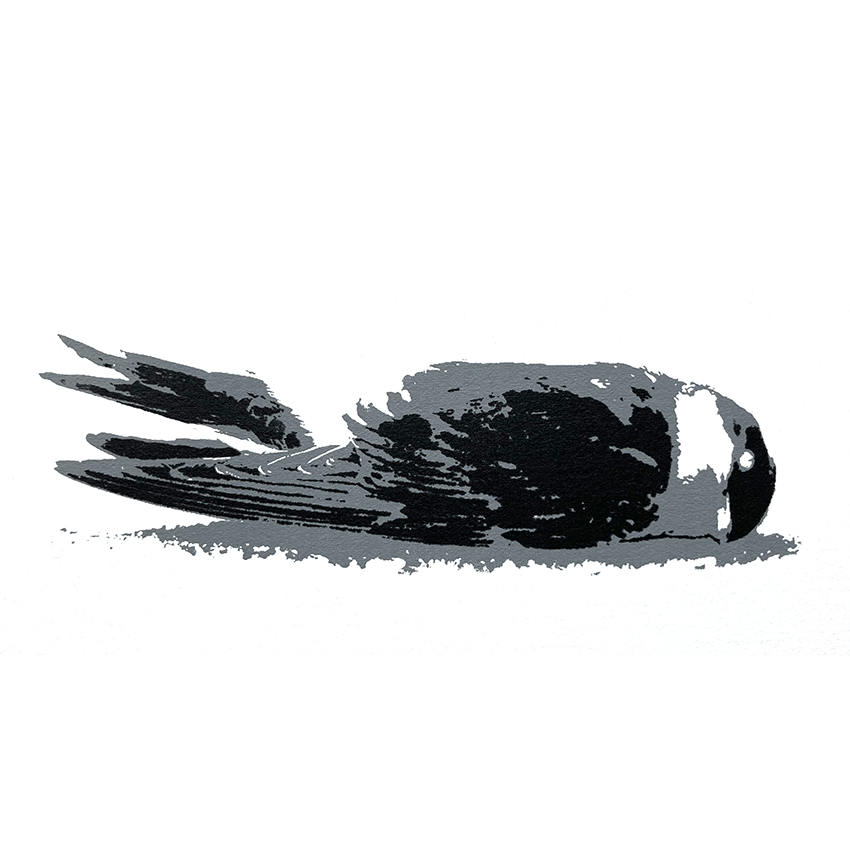
This installation in the Blackchurch Studio’s Curiosity Cabinet represents the first part of an interrogation on grief and loss by artist Monika Crowley, supported by the Arts Council of Ireland Covid Fund. An artifact with one thread of the narrative of the departed’s life is displayed, in the other boxes are the stories we only mention in private.
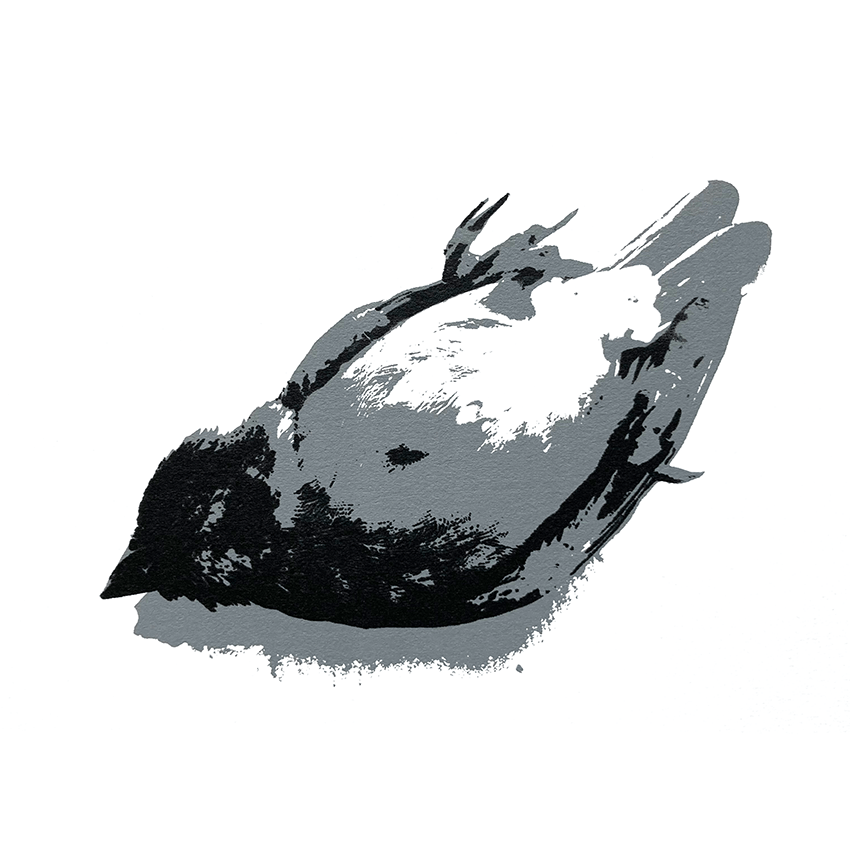
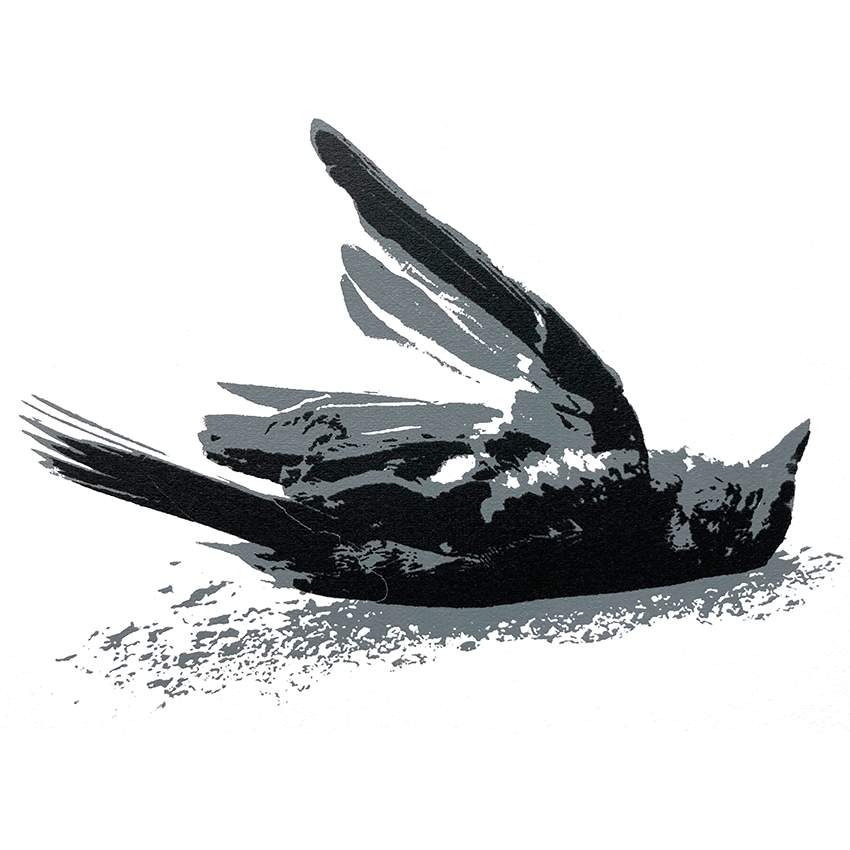
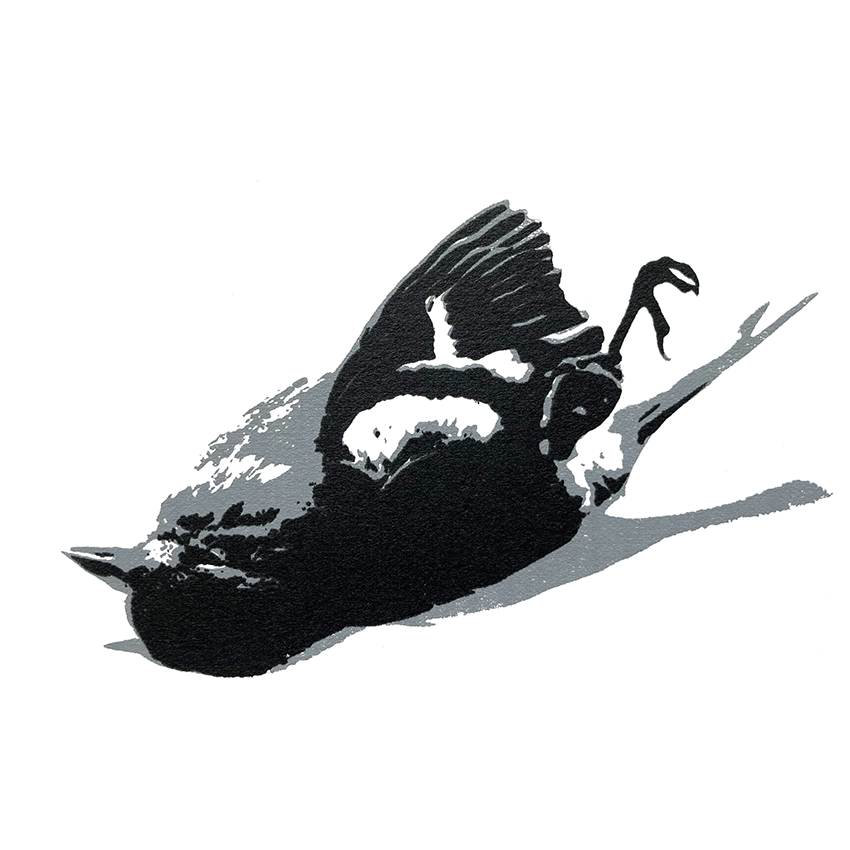
The dichotomized artworks embody the love of a tight family unit for the person leaving, who is represented here by the scene from his sickbed window. In the days he lay dying, viewing the murmurations of starlings beyond his bedside window gave respite to the family – watching the cloud of little birds swoop and soar, distracting from the barely discernible rise and fall of the body in the bed. A lifetime ago he used to watch the birds from the downstairs bathroom, but with mal-intent towards the little creatures. The printed artifact is the mirror that hung in that bathroom and reflected. The little boxed birds we don’t talk about.


CLEANER
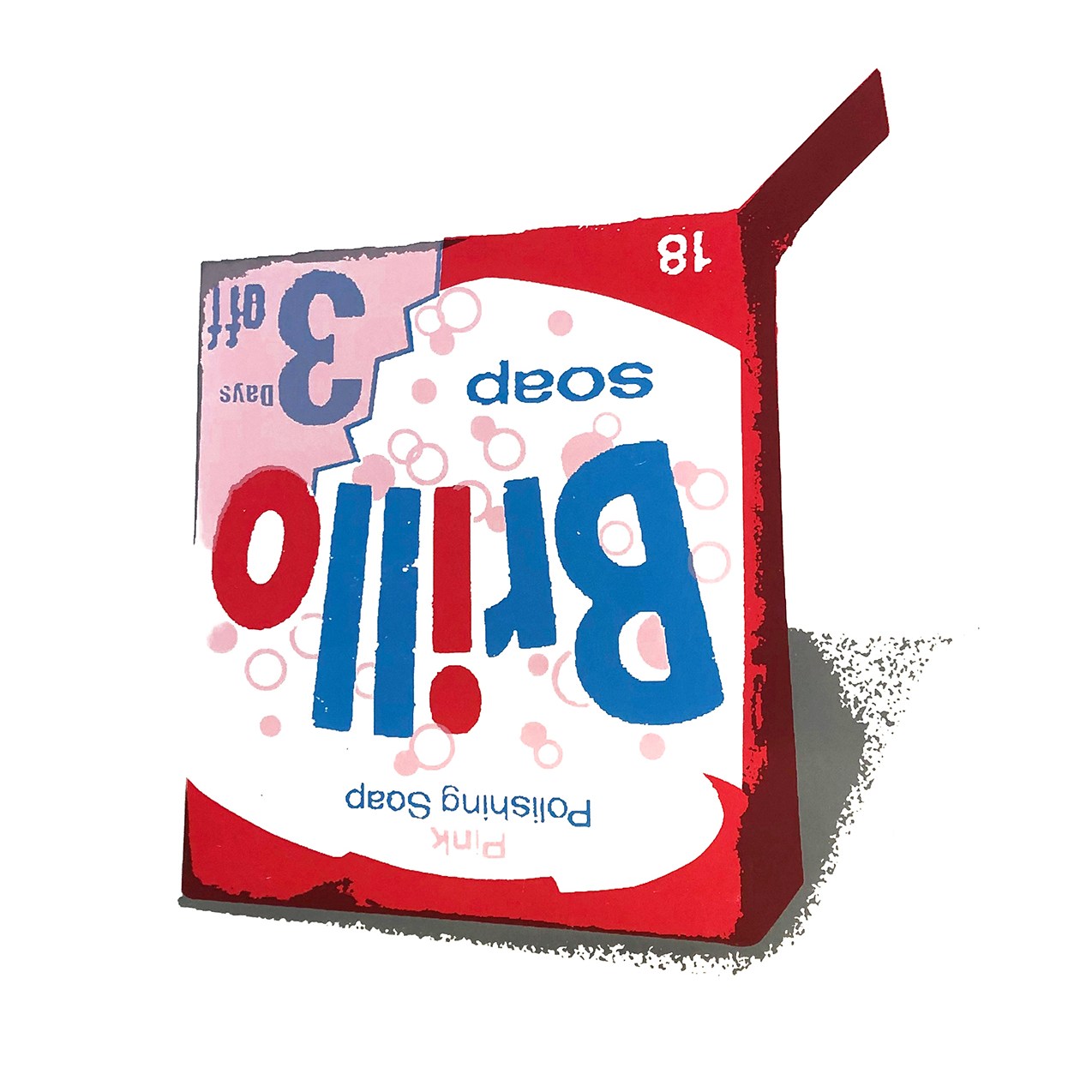
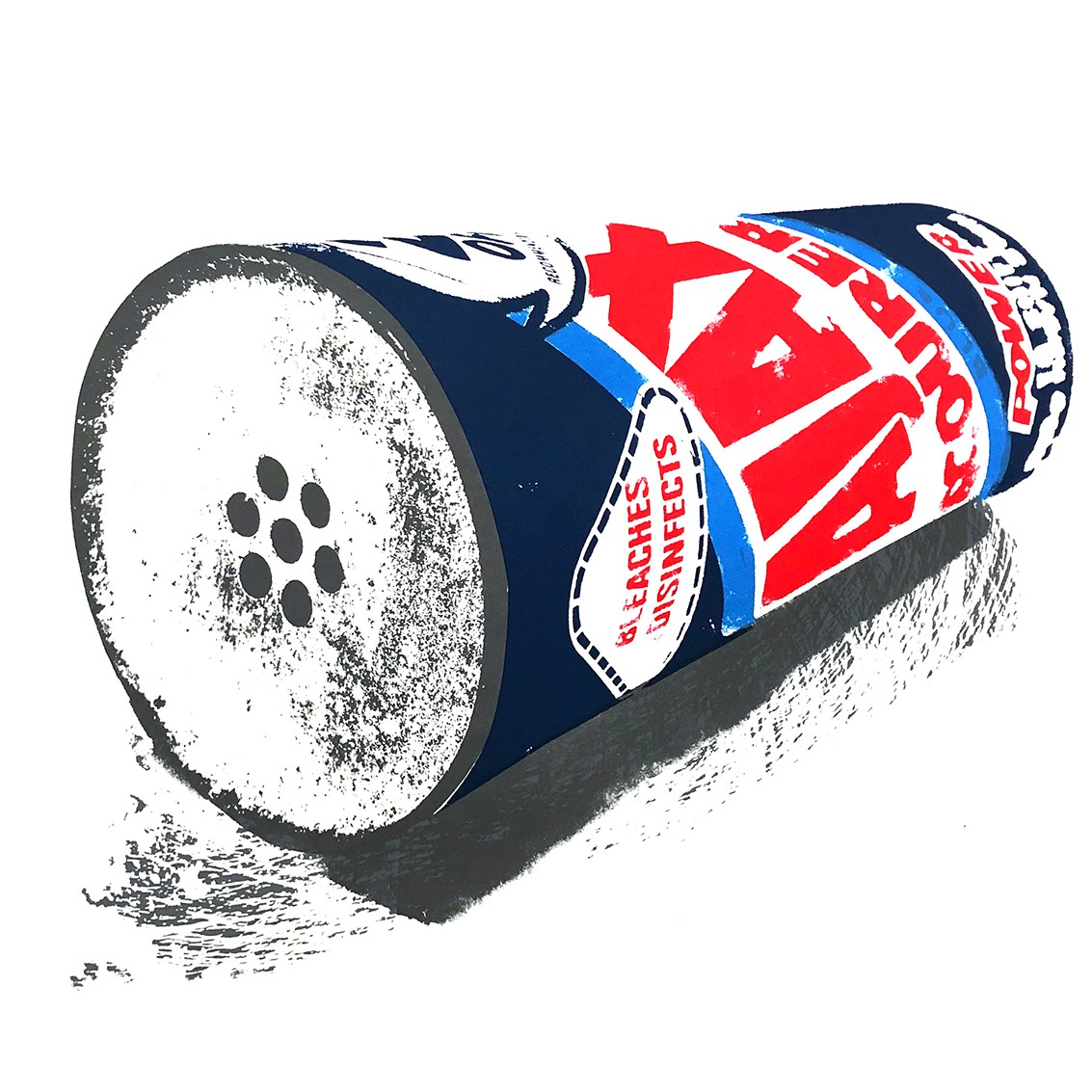
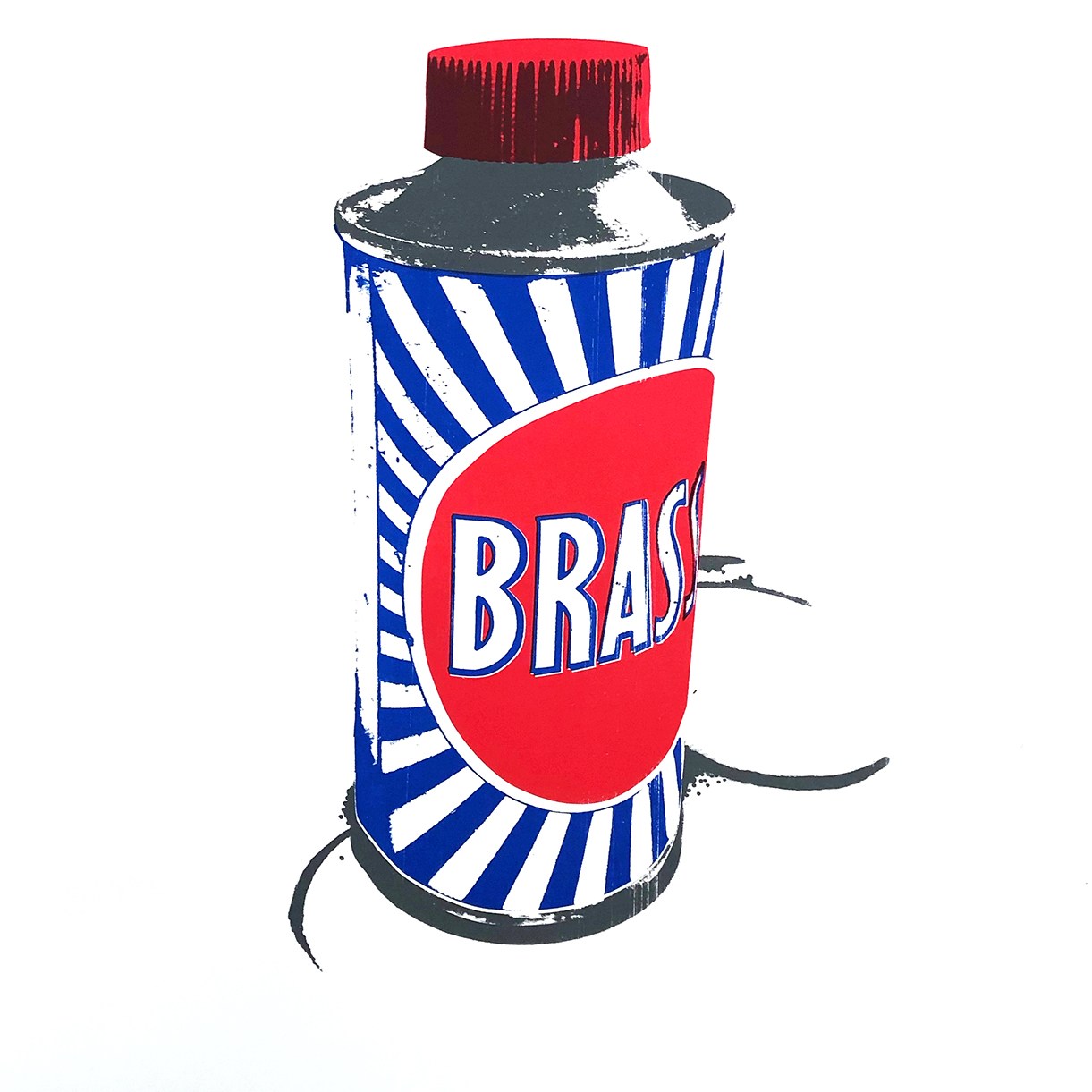
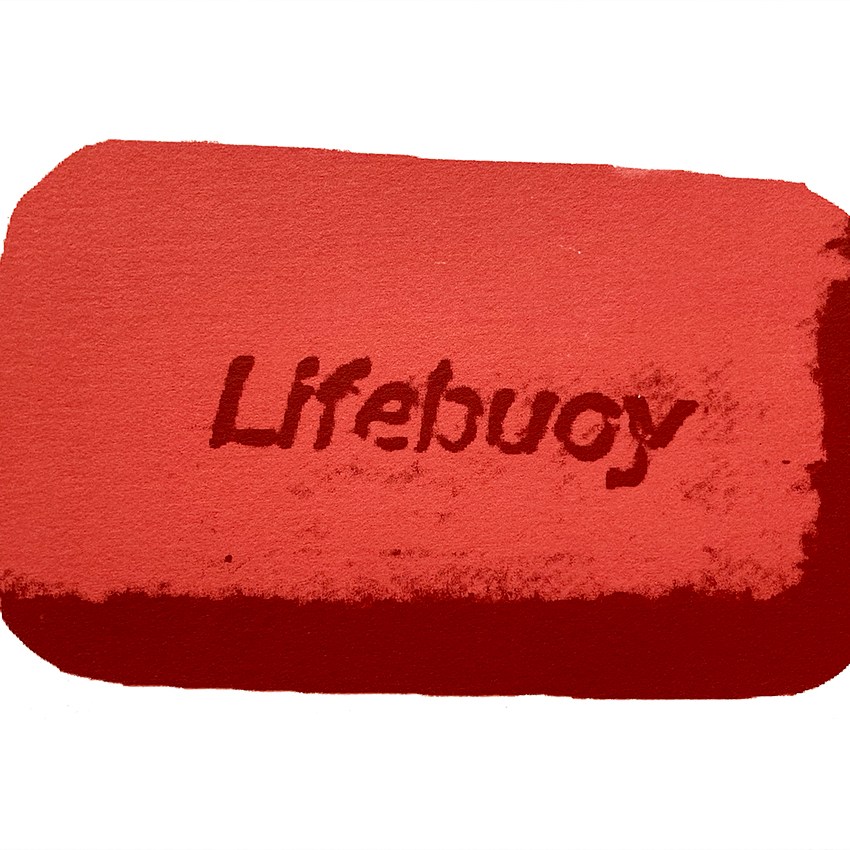
A small body of work that acknowledges the notion that even the process of cleaning leaves behind it’s own marks.


TREATMENT
Solo show at the Molesworth Gallery September 2018.
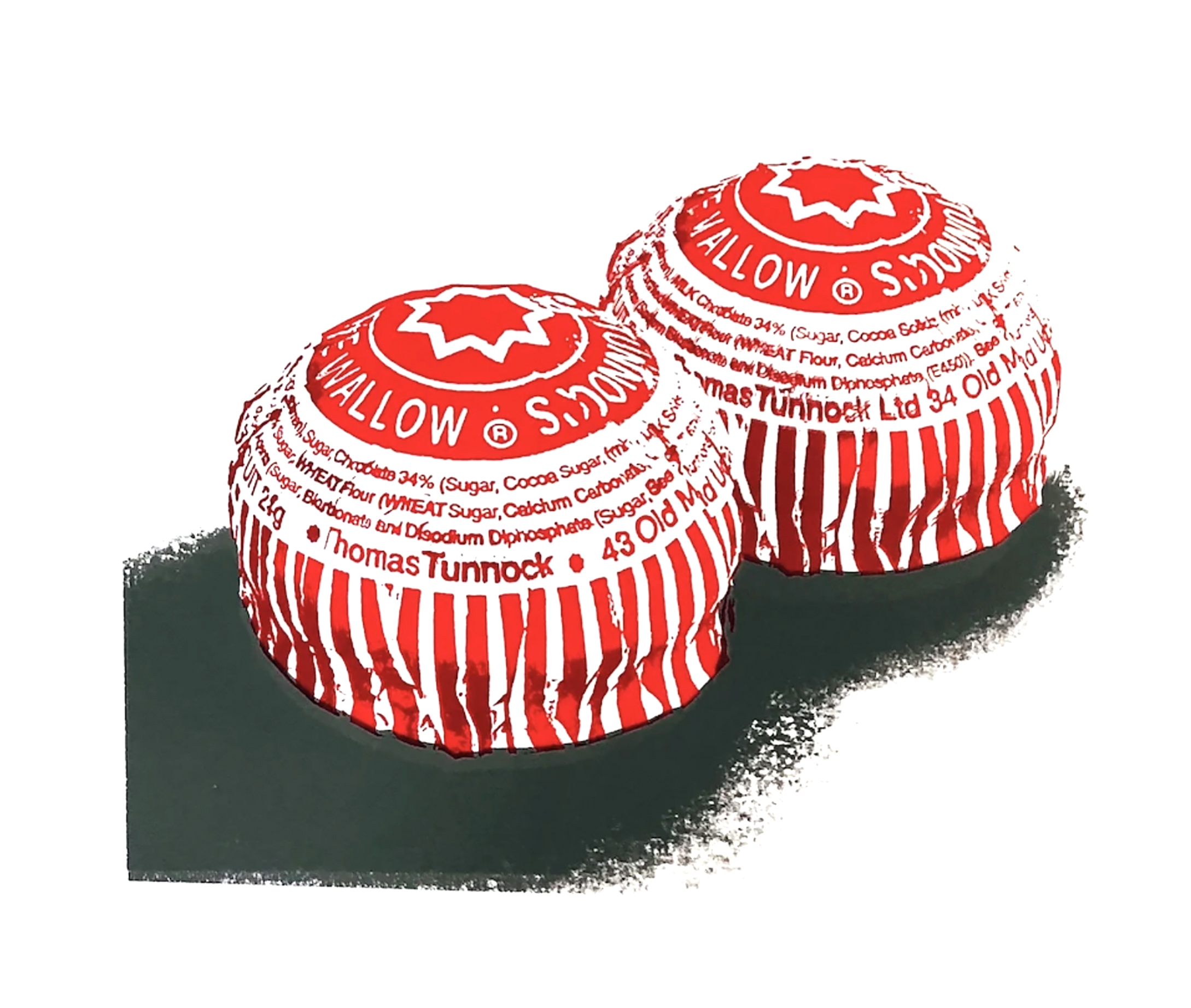
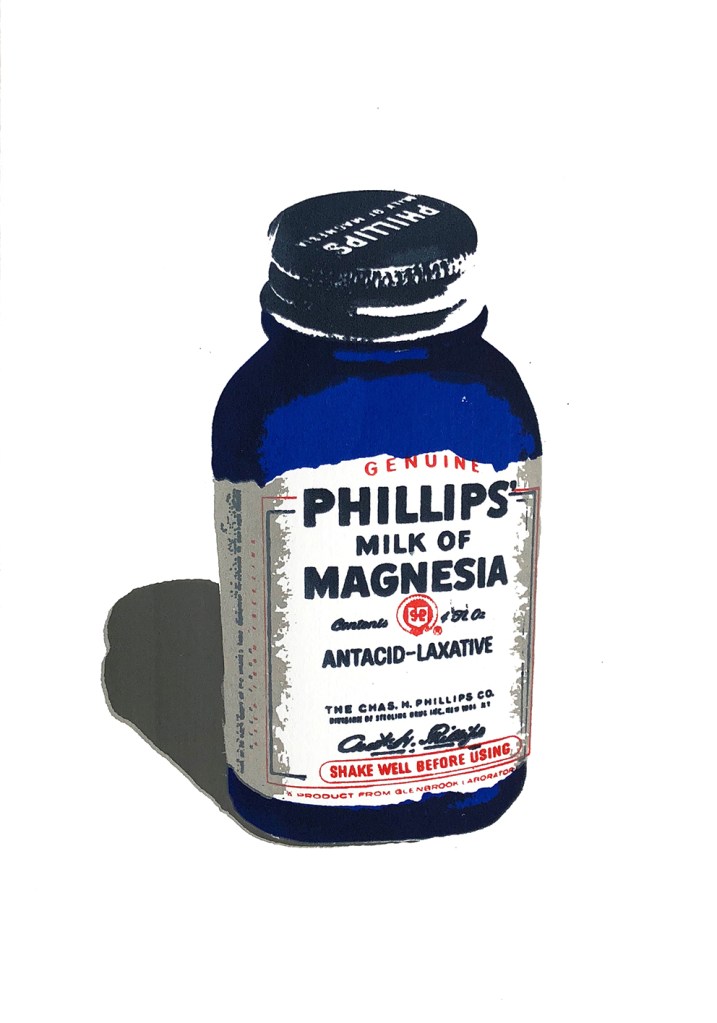
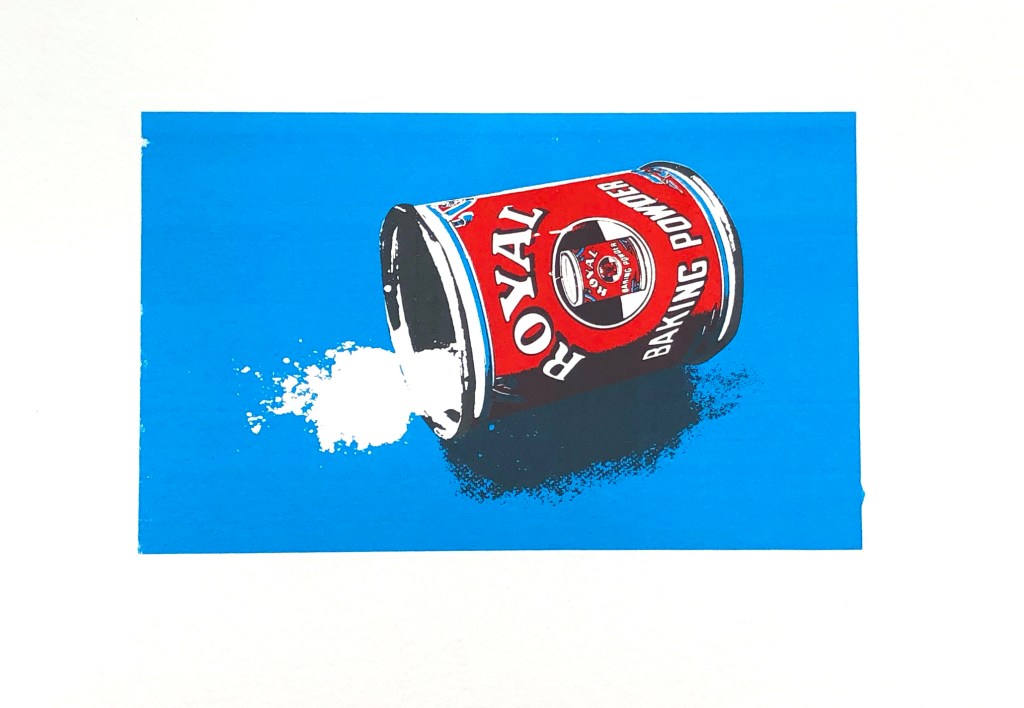
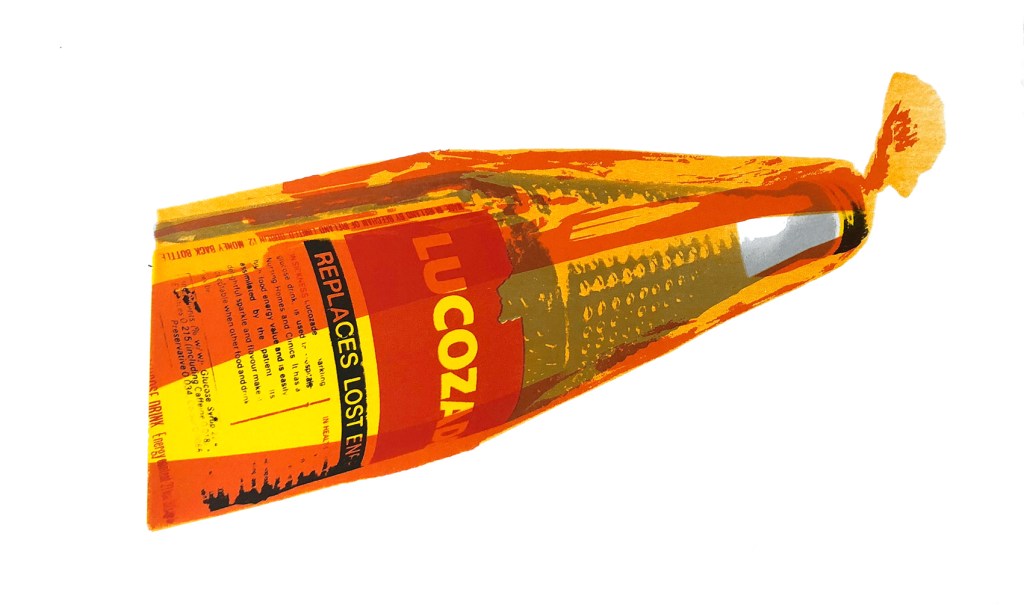
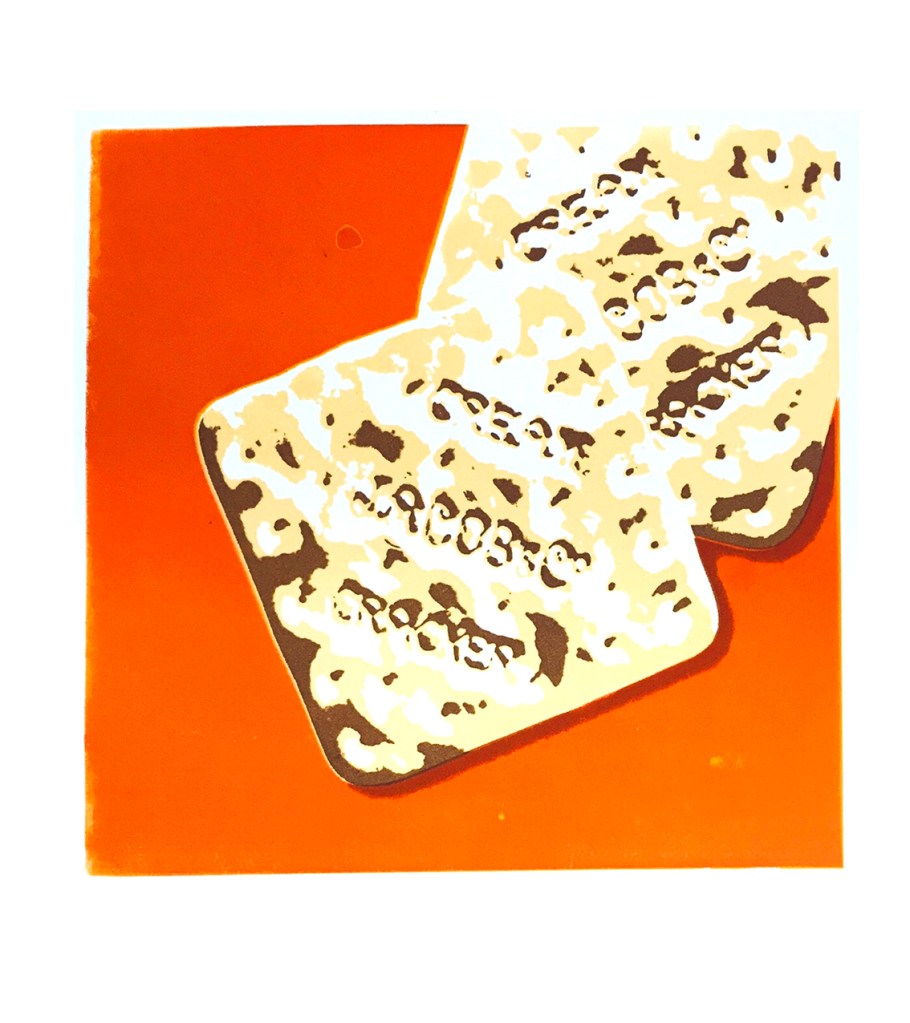
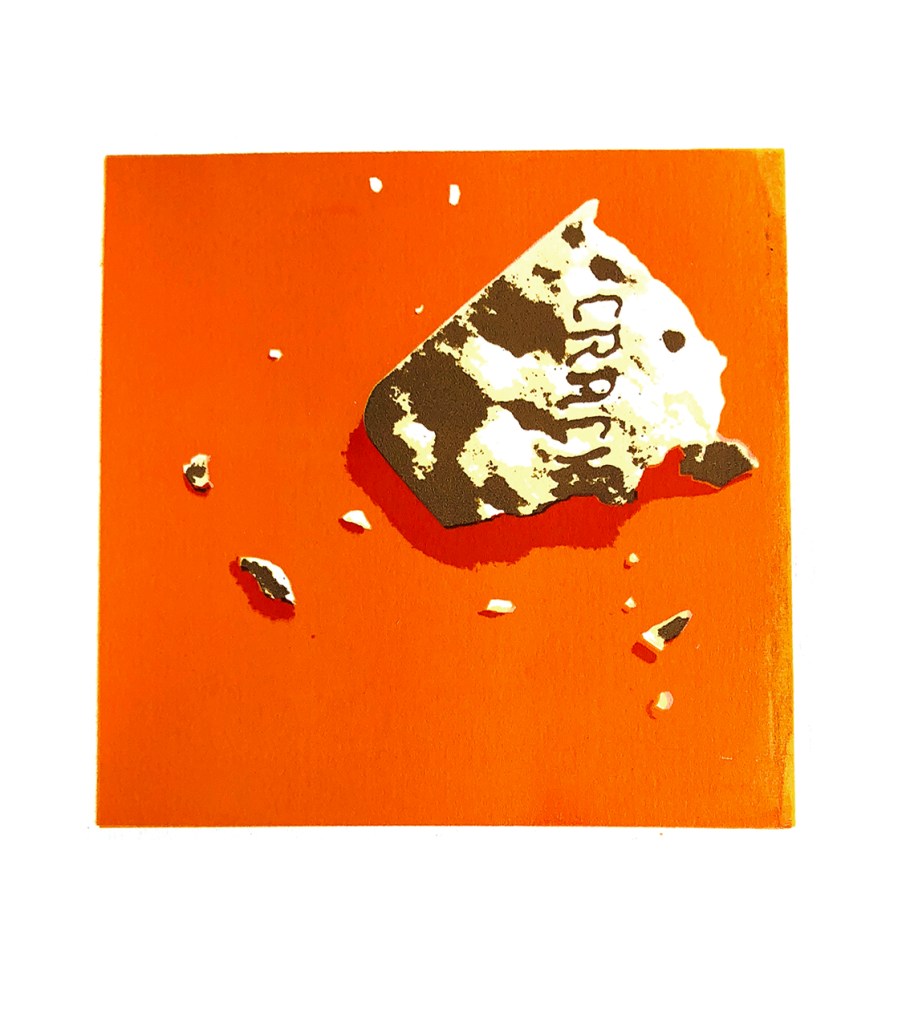
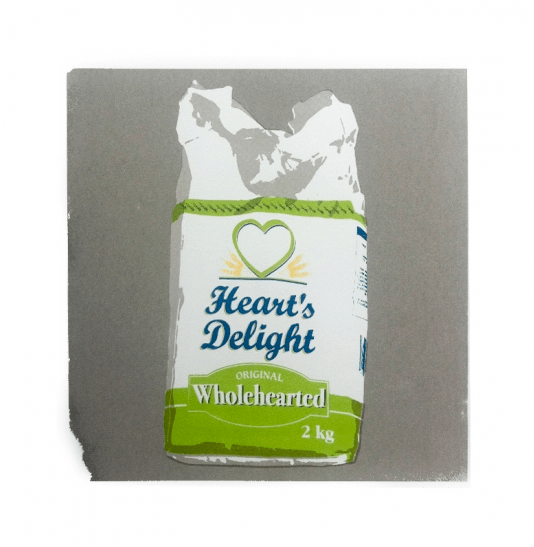
Printmaker Monika Crowley is not the first artist to draw inspiration from the kitchen cupboard, Andy Warhol’s 1962 Campbells Soup Cans kickstarted an entire genre of art that pays homage to commercialism and branding. For Crowley it has become a visual language in and of itself, exploiting the ability of nostalgic brands to tap into the emotions these references conjure.
A previous body of work appropriated images of domesticity to reflect on the traditional structure of the home and changing expectations of modern motherhood. This current series is also rooted in personal experience, this time executed through the prism of a personal journey of illness and recovery.
Musing on our relationships with food, illness and love and how these have changed over time, yet remain so familiar from childhood, the artist plays with the Irish tradition of expressing love through food: cooking for family, stocking the freezer for births and bereavements and the random foods considered acceptable and palatable for the sickbed.
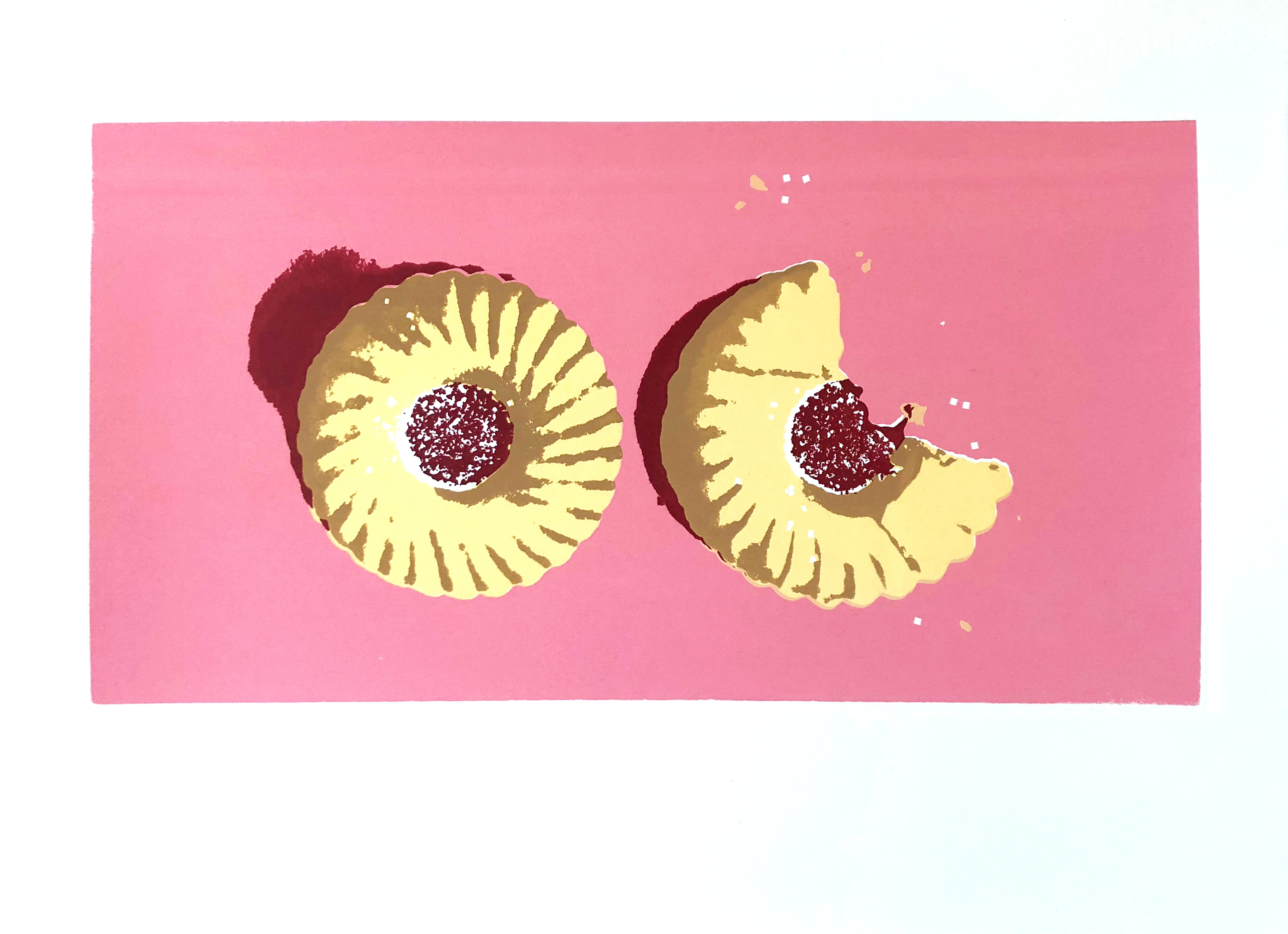
The work also explores what happens during illness when your own body turns against you and rejects all sustenance. The answers are encoded in the colour palette of each piece: blue is a colour of pain and nausea, pink expresses both emotional trauma and notions of femininity while orange and yellow are healing however the overall tone of the work is optimistic and each piece is titled with a wry humour that encourages the viewer to look deeper.
TREATMENT – pink series


TREATMENT – Blue series



TREATMENT – orange series



DOMESTIC
Solo Show at the Molesworth Gallery June 2012.
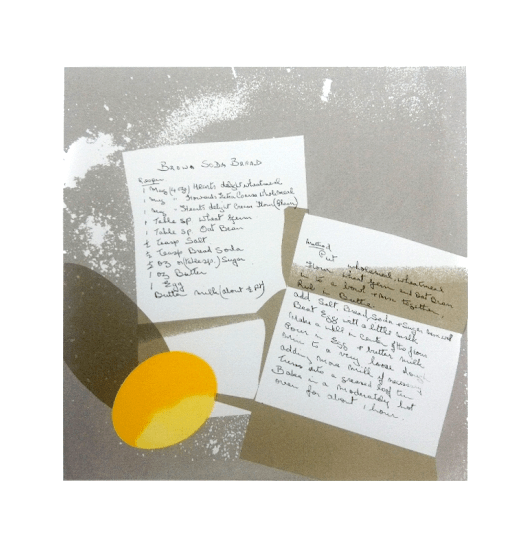
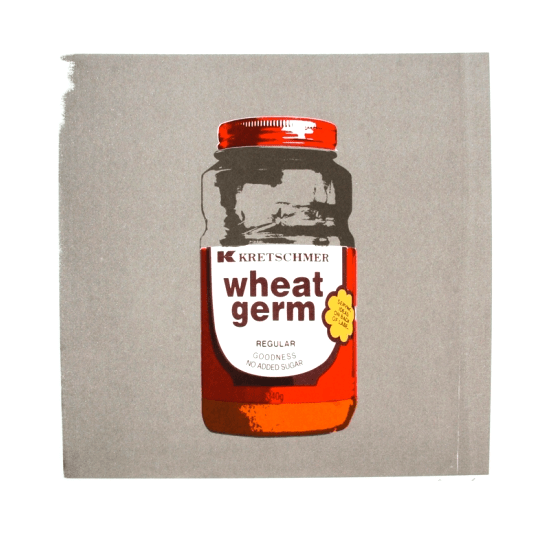
This series deals with motherhood, rite of passage and advice passed from mother to daughter. They serve as a ‘memoir-cum-warning’ about current nostalgia for retro culture and a time when mothers were not expected to juggle jobs and families.
Many women who work long hours out of financial need, yearn for more time at home and distance has lent enchantment to the traditional structure of the home where the man goes out to work and the women is home-maker. But for every working mother now who fantasises about giving up work there was surely a ‘captive wife’ then, trapped and frustrated by full-time domesticity.
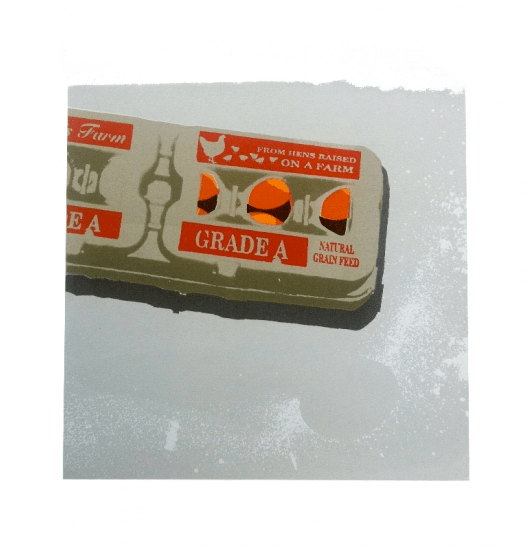
These images deal with hopes and aspirations, as well as fear and loss and the anticipation of change. A Mothers letter, the empty bowl, the old babyfood tin that holds baking soda and the closed box of eggs with one missing. They contain memories from the artist’s own childhood and evoke the constant and creational nature of baking but hint at the unrelenting demands of providing for a family.





 Monika Crowley Artist